The 12 English tenses with examples tell us when things happen. They help us talk about actions in the past, present, and future. Each tense shows if something is finished, happening now, or will happen in the future.
12 English Tenses
English has 12 different tenses that help us talk about when things happen whether you’re talking about something happening right now, something that already happened, or something that will happen in the future.
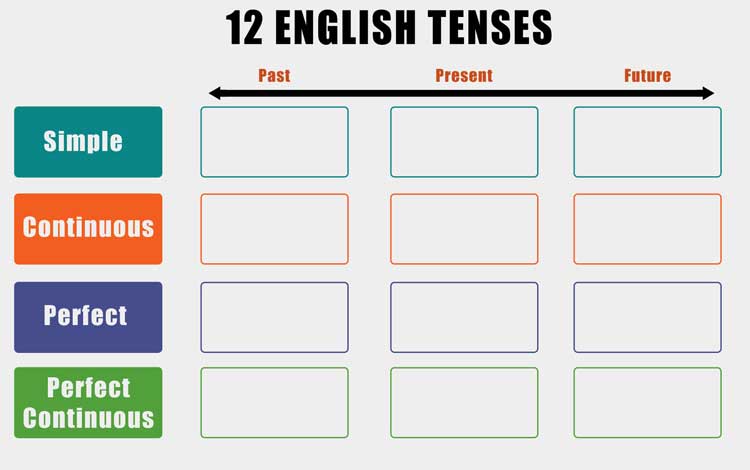
The 12 English tenses with examples are the key to communication. They show if an action is still happening, finished, or was ongoing at a certain time. Let’s break them down into three tense periods – past tenses, present tenses, and future tenses.
1. Past Tenses
Past tenses have four categories: Past Simple, Past Continuous, Past Perfect, and Past Perfect Continuous. Let’s look at each of these categories individually with examples.
A. Past Simple
Structure: Subject + past form of the verb
Explanation: Past simple tenses describe actions that happened and finished in the past.
Examples:
- I walked to school.
- I worked at home.
- I played tennis on the weekends.
- Susan wrote articles for the news.
- Jonathan built houses for the government.
B. Past Continuous
Structure: Subject + was/were + verb-ing
Explanation: Past continous tenses describe actions that were ongoing in the past.
Examples:
- I was walking to school.
- I was working at home.
- I was playing tennis on the weekends.
- Susan was writting articles for the news.
- Jonathan was building houses for the government.
C. Past Perfect
Structure: Subject + had + past participle
Explanation: Past perfect tenses describe actions completed before another past action.
Examples:
- I had walked to school before it started raining.
- I had worked at home due to illness.
- I had planned the event well in advance.
- Susan had written articles for her blog before it went public.
- Jonathan had built several houses for the government by the time he finished his appenticeship.
D. Past Perfect Continuous
Structure: Subject + had + been + verb-ing
Explanation: Past perfect continuous tenses describe actions started in the past and continued up until another past action.
Examples:
- I had been walking for hours before I reached the school.
- I had been working at home for months before I went back to the office.
- I had been planing the event for weeks before it was cancelled.
- Susan had been writing articles for her blog when she received the bad news.
- Jonathan had been building houses for the government before he started a new company.
2. Present Tenses
Also, present tenses have four categories: Present Simple, Present Continuous, Present Perfect, and Present Perfect Continuous. Let’s look at each of these categories individually with examples.
A. Present Simple
Structure: Subject + base form of the verb (s/es for third-person singular)
Explanation: Present simple tenses describe regular actions or facts.
Examples:
- I walk to school.
- I work at home.
- I play tennis on the weekends.
- Susan writes articles for the news.
- Jonathan builds houses for the government.
B. Present Continuous
Structure: Subjet + am/is/are + verb-ing
Explanation: Present continous tenses describe ongoing actions happenning now.
Examples:
- I am walking to the store.
- They are working at home.
- I am playing football on the weekends.
- Susan is writing articles for her blog.
- Jonathan is building houses for the government.
C. Present Perfect
Structure: Subjet + has/have + past pasticiple
Explanation: Present perfect tenses describe actions that happened at a unspecified time before now.
Examples:
- I have walked to the park.
- They have worked at home.
- David has played football on several occasions.
- Susan has written articles for her blog.
- Jonathan has built houses for the government.
D. Present Perfect Continuous
Structure: Subjet + has/have + been + verb-ing
Explanation: Present perfect continuous tenses describe actions started in the past and still continuing.
Examples:
- I have been walking to the park since we moved to our new house.
- They have been working at home for about six months.
- David has been playing football over the weekend.
- Susan has been writing articles for her blog for two years.
- Jonathan has been building houses for the government when required.
Download this Cheat Sheet for Free!
3. Future Tenses
Future tenses also have four categories: Future Simple, Future Continuous, Future Perfect, and Future Perfect Continuous. Let’s look at each of these categories individually with examples.
A. Future Simple
Structure: Subjet + will/shall + base form of the verb
Explanation: Future simple tenses describe actions that will happen in the future.
Examples:
- I shall visit the dentist tomorrow.
- They will sing at the concert tonight.
- Peter will go to the store.
- Jennifer will cook dinner on Wednesday.
- They will receive their awards soon.
B. Future Continuous
Structure: Subjet + will/shall + be + verb-ing
Explanation: Future continuous tenses describe actions that will be happening at a specific time in the future.
Examples:
- I shall be visiting the dentist tomorrow.
- They will be singing at the concert tonight.
- Peter will be going to the store.
- Jennifer will be cooking dinner on Wednesday.
- They will be receiving their awards soon.
C. Future Perfect
Structure: Subjet + will/shall + have + past participle
Explanation: Future perfect tenses describe actions that will be completed before a certain time in the future.
Examples:
- I shall have visited the dentist by the end of the week.
- They will have sung at the concert before the presentations.
- Peter will have gone to the store before it closes.
- Jennifer will have cooked dinner before their arrival.
- They will have received their awards by tomorrow.
D. Future Perfect Continuous
Structure: Subjet + will/shall + have been + verb-ing
Explanation: Future perfect continuous tenses describe actions that will continue up to a certain point in the future.
Examples:
- By next July, I shall have been working on this project for six months.
- They will have been living in the city for a decade by the end of the year.
- They will have been waiting for the bus for an hour by the time it arrived.
- Jennifer will have been sick for a week by tomorrow.
- They will have been painting the house for over a month by the time they finish.
Conclusion: Understanding the 12 English tenses with examples helps you talk about the past, present, and future with more clarity. Each tense gives us clues about when something happens. With practice, you’ll be able to use them naturally in your conversations and writing with great skill and confidence!